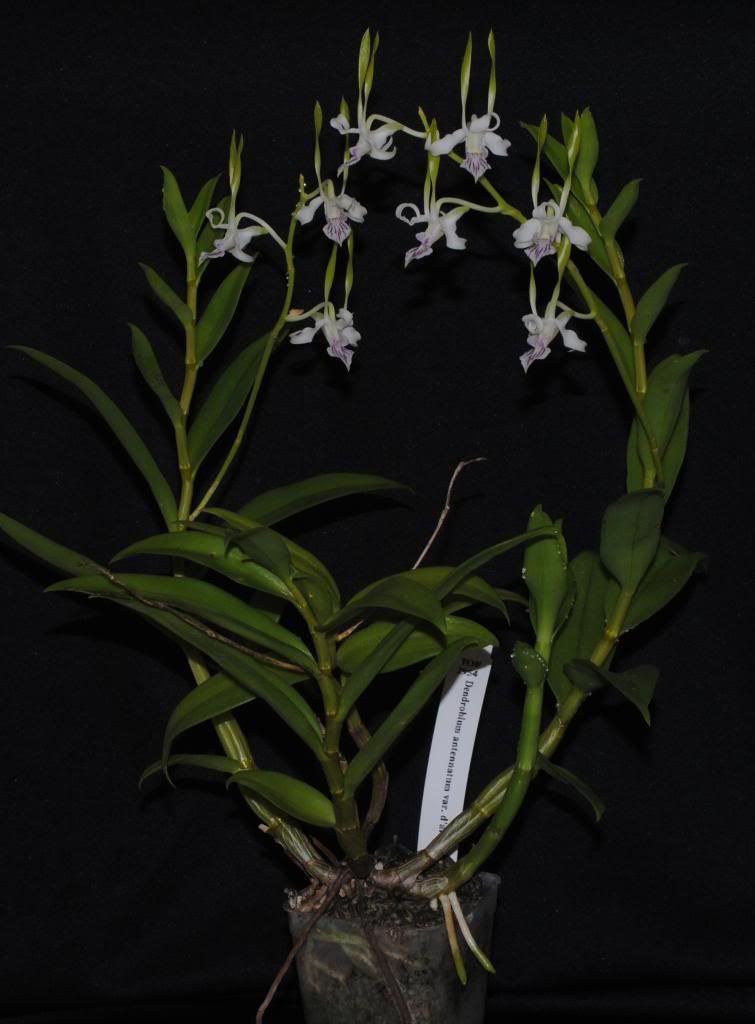
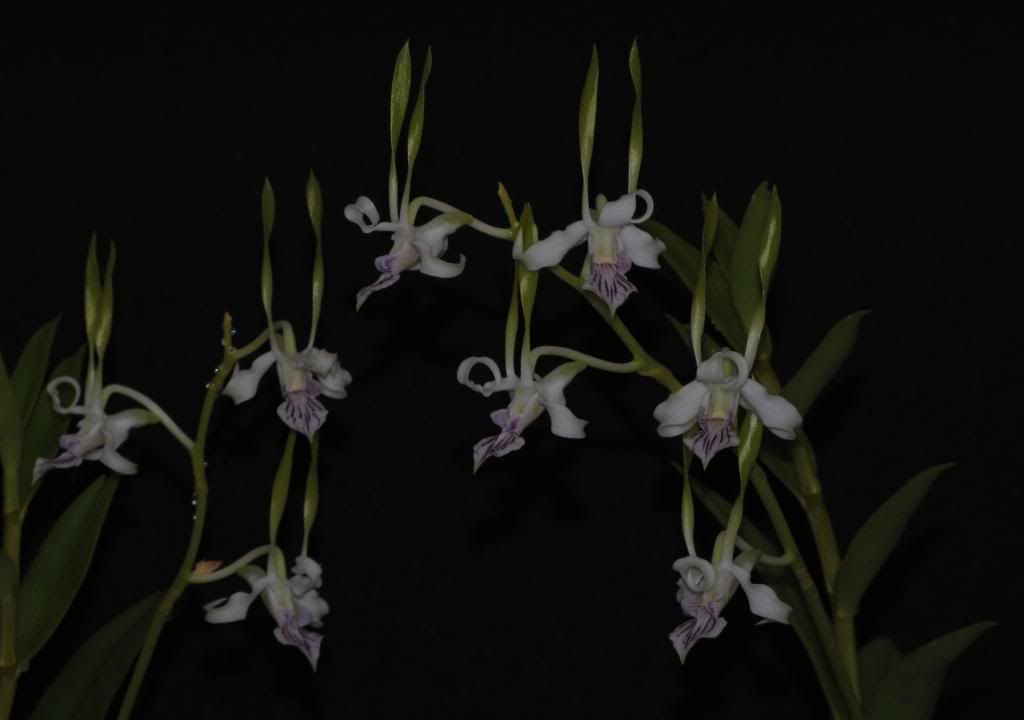
Pages


Sunday, July 28, 2013

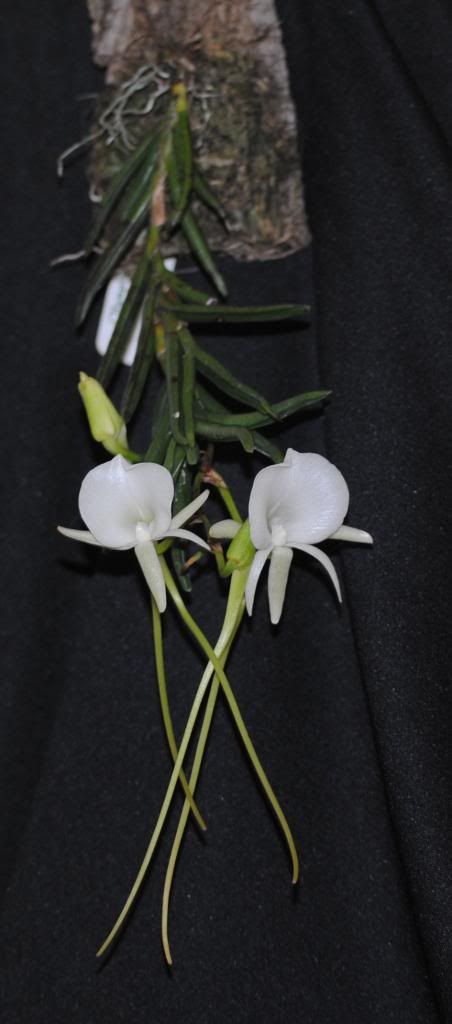
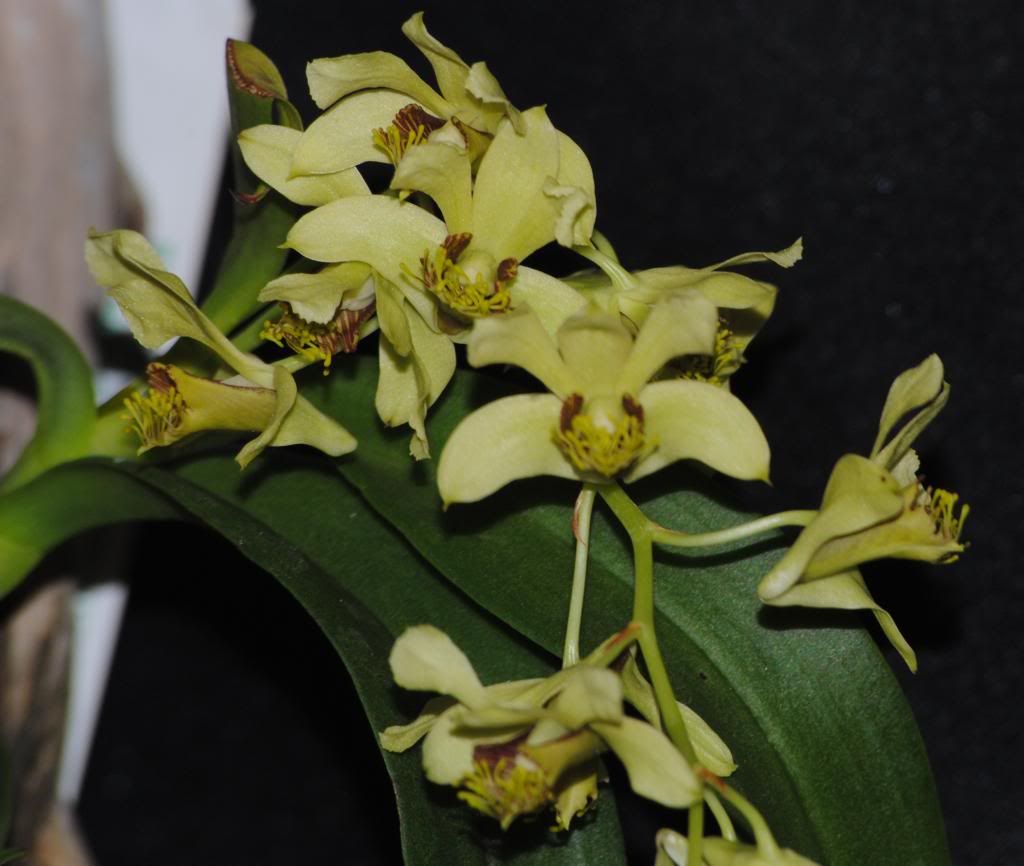
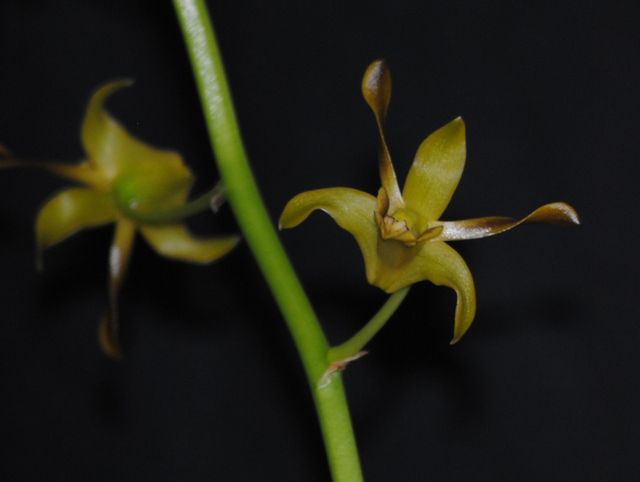
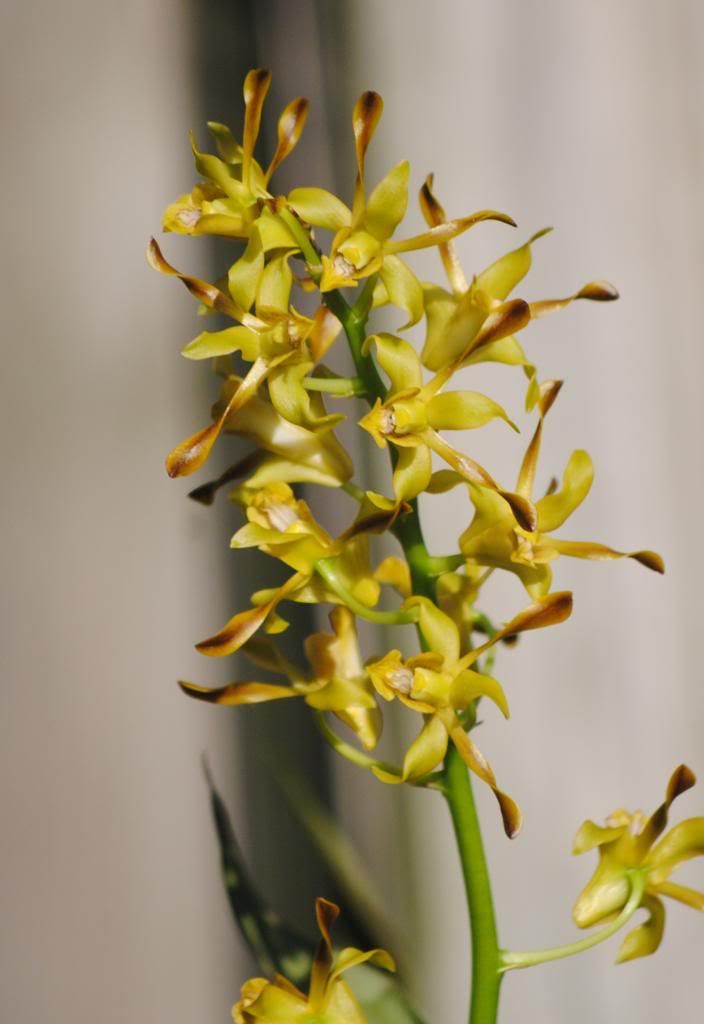
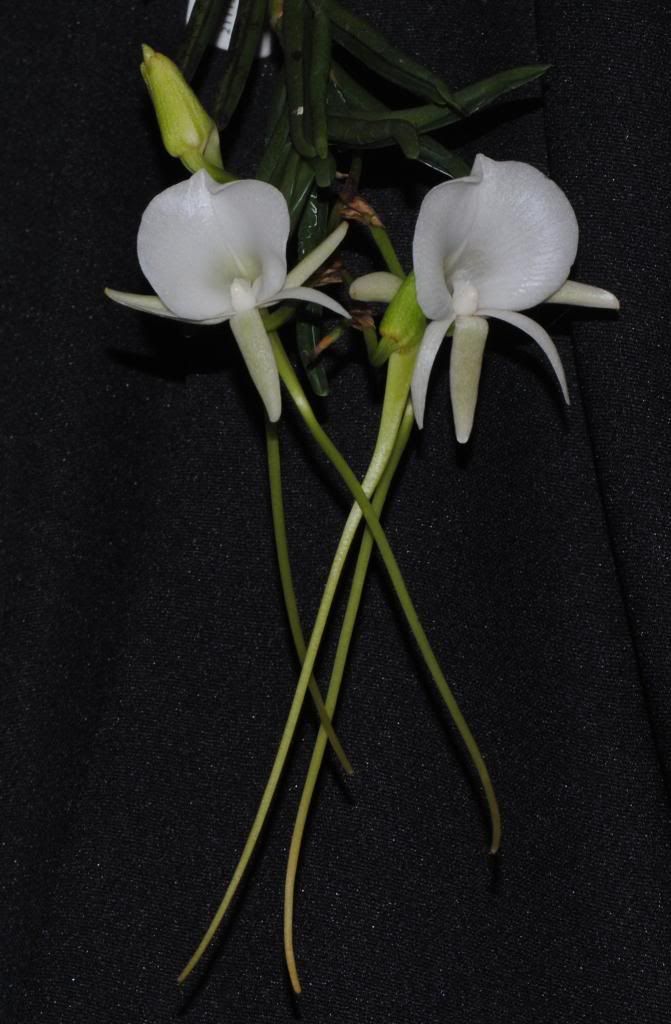
Angraceum scottianum

I've always loved white flowers, so you would think I would have at least a few Angraecums right?  Well, I used to.  About 5 years ago, I had at least 15 different Angraecums and Aerangis. Well, it wasn't a story with a happy ending. 

One summer, I was having a pretty bad slug and snail problem.  This was back when I lived in North Carolina.  After trying bait, diatomaecous earth, beer, coffee grounds and who knows what else (none of which worked), I desparately tried a home remedy concoction. Do I even need to finish this story?

Well the concoction seemed like it killed baby slugs, but adult ones - no effect. I swear I could see them laughing at me :)  But what it did do was remove the waxy protective coating off of 90% of my monopodials (no effect on the sympodials??), which all pretty much died within a couple weeks. You could actually see the difference in the leaves.  The only ones that survived were 4 Vandas and 1 Aerangis.  That is it.

Since then, I've only acquired one Angraecum - scottianum - as a very very small seedling.  It actually has grown well for me, and just finally bloomed for the first time.  I might have to start acquiring more again.  2 open flowers and 2 more buds on what is still a very small plant.  I can't wait for it to grow up.


Saturday, July 27, 2013

More Dendrobiums

Well, it has been quite a while since my last post, 3 months.  During this time, we have moved from the panhandle of Florida down to SW Florida. So, it is time to learn a whole new microclimate again.  For the most part, the Hoyas and orchids survived, so far no casualties, but the Hoyas are just starting to recover from their sulking.  The orchids handled it much better, although quite a few spikes were damaged.

Also, during this time, I wasn't able to get pictures of many of them that bloomed, but here are some I managed to get.

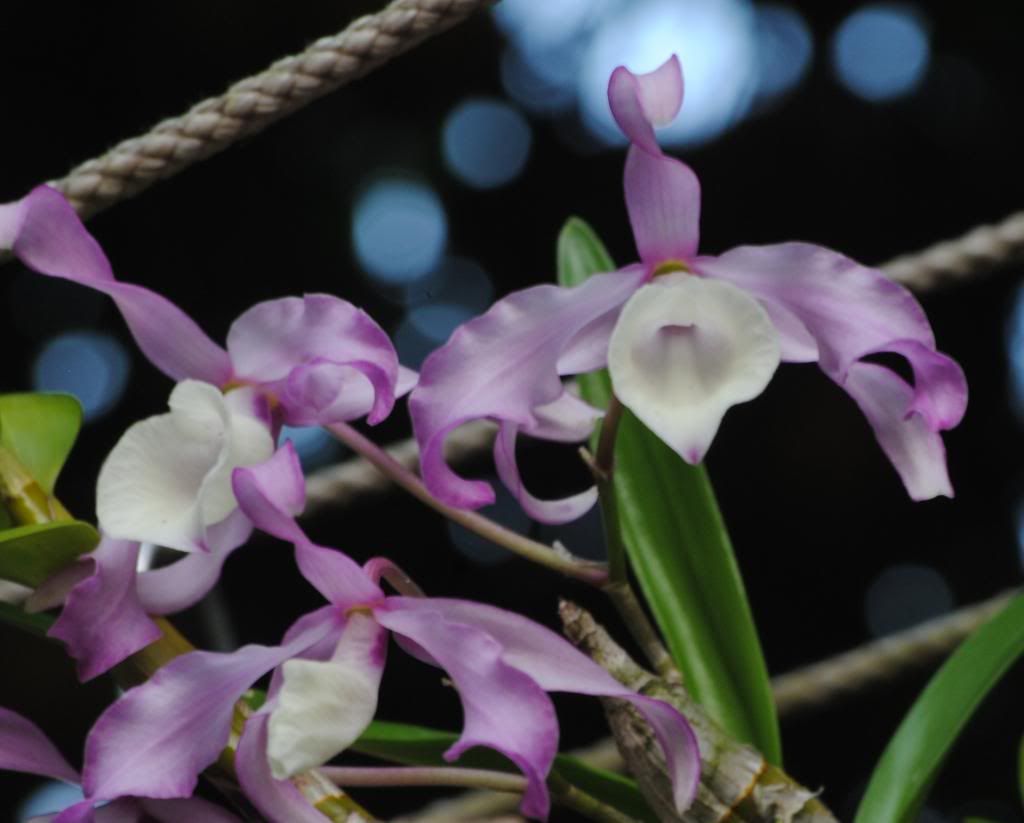
Dendrobium tortile - I grow this one hanging right beside D. nobile, so the exact same culture.  Cool to hot, plenty of water and fertilizer while growing, and almost none when not.  This is my first bloom, and it looks like the first bloom for the plant.  A couple years from now, this should be a relatively big plant.

The color in the pictures are a bit off, it is more pink, less lavender.  This bloomed back in May.


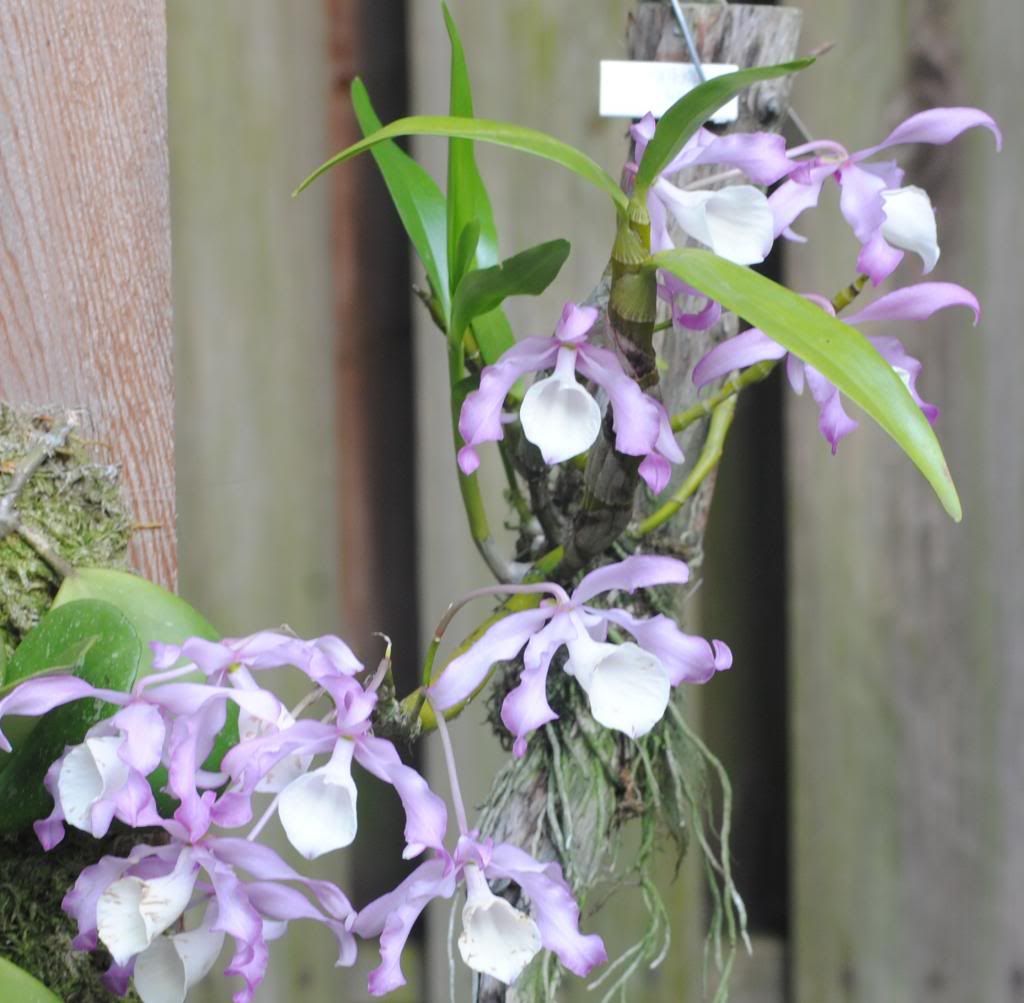
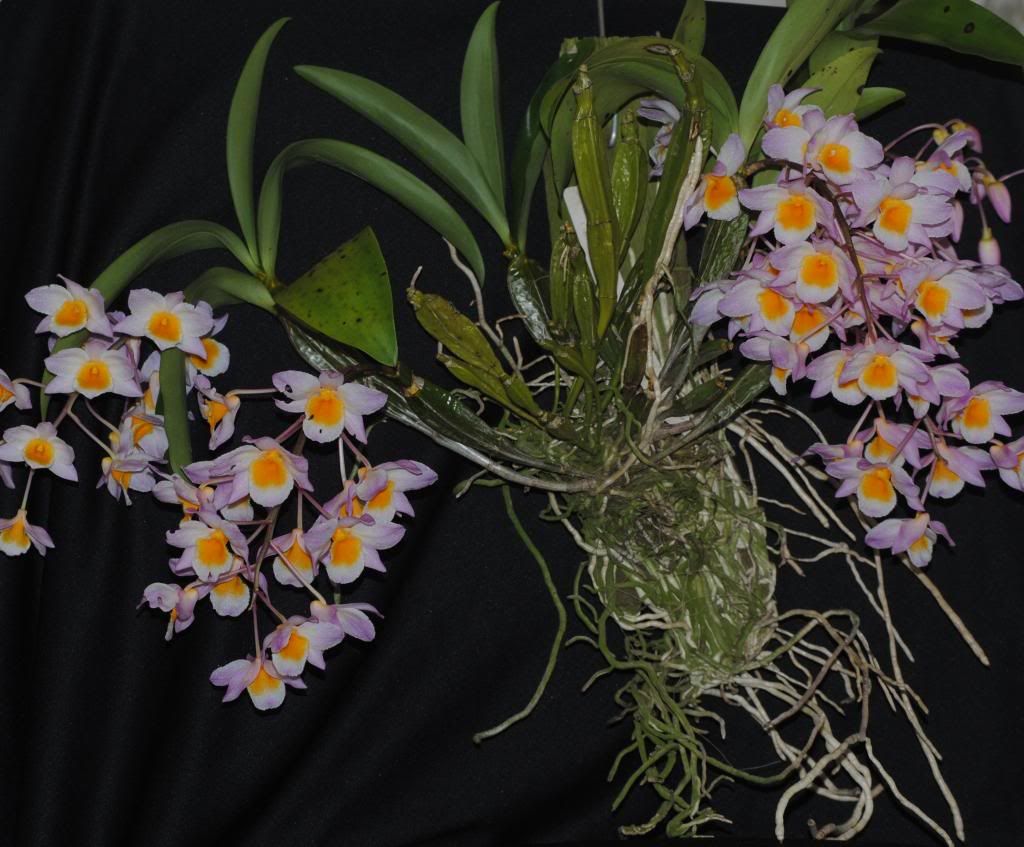
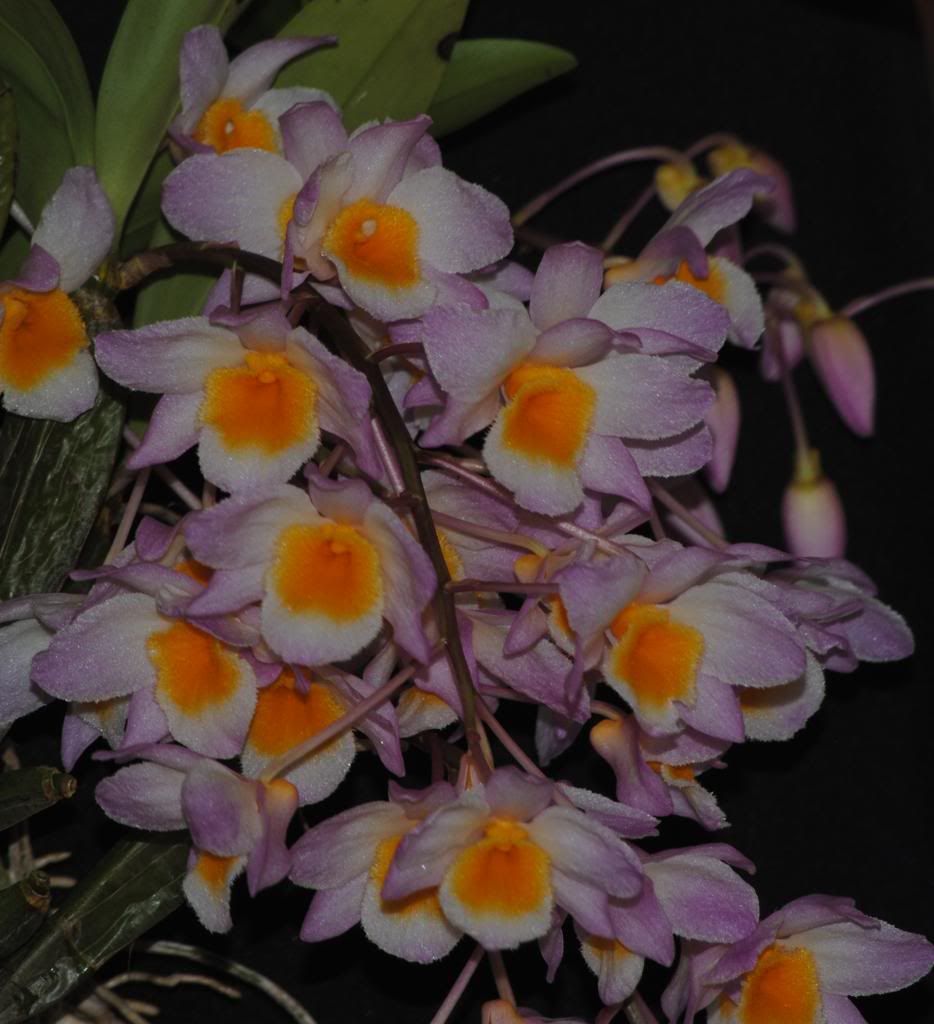
Dendrobium griffithianum - from Section Callista, one of my favorites of that section.  I've had this plant for at least 5 years now, had divided it at one point.  The main potted piece eventually died, but the section I mounted is doing well.  Grown in typicall Callista Dendrobium culture.


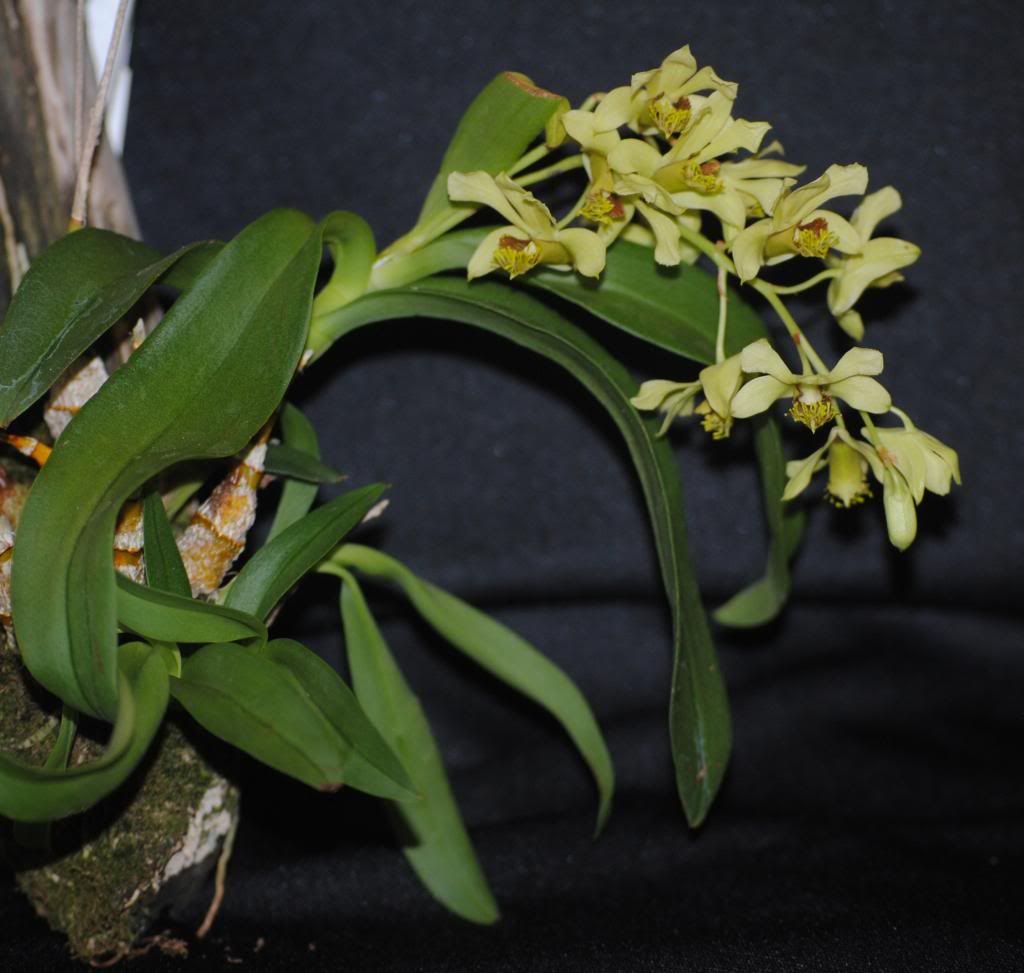
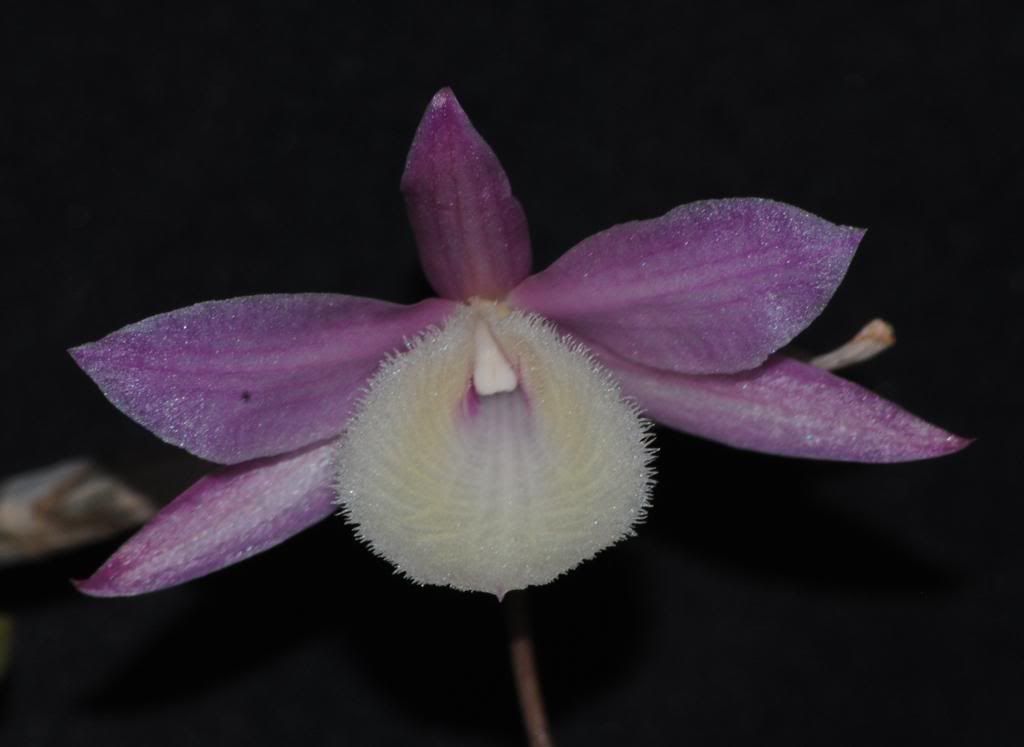
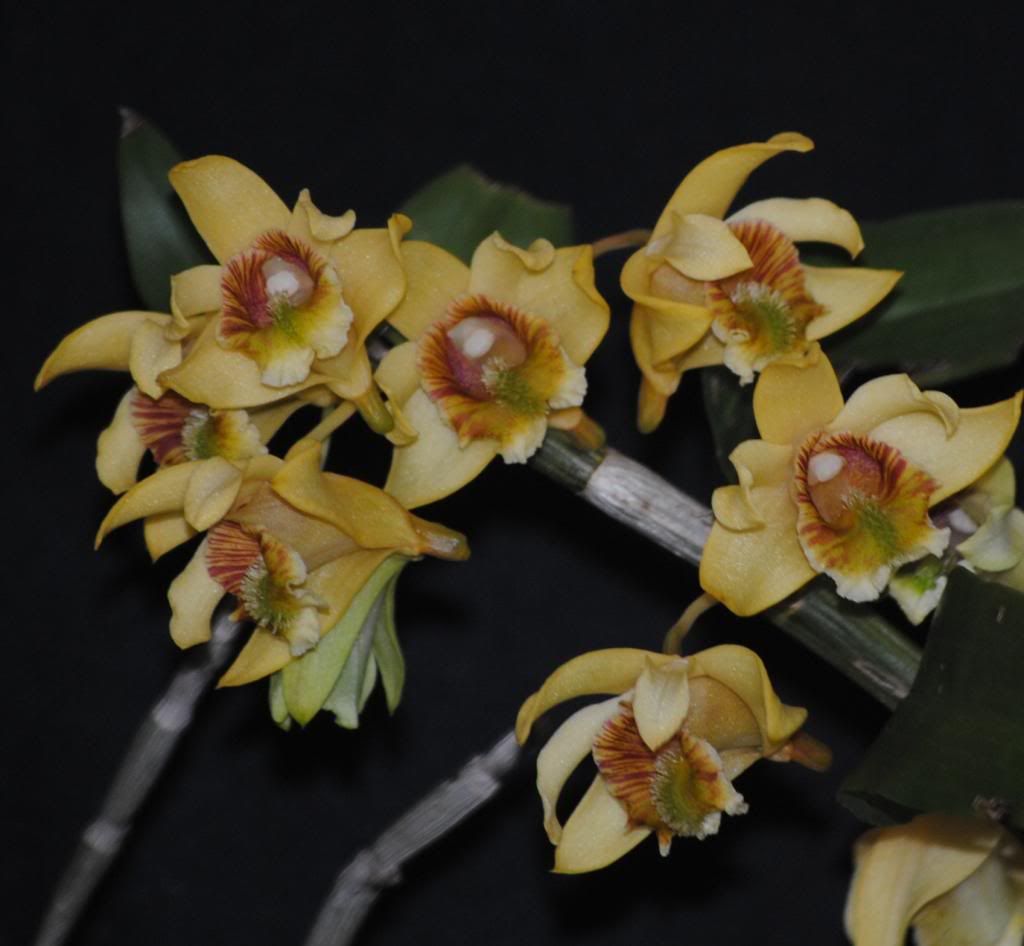
And the third for today, Dendrobium delacourii.  The pictures do not do this one justice, the lip is extremely intricate.  Although not the first blooming for the plant, it is the first time I've bloomed it.  I have only had this for almost a year, but did keep it warm, and some watering through last winter.


Over the next day or two, hopefully I'll get caught up with the few other flowering plants I did manage to get.
 
Hope you enjoy!
 

Saturday, April 27, 2013

Dendrobium sociale, farmeri and another

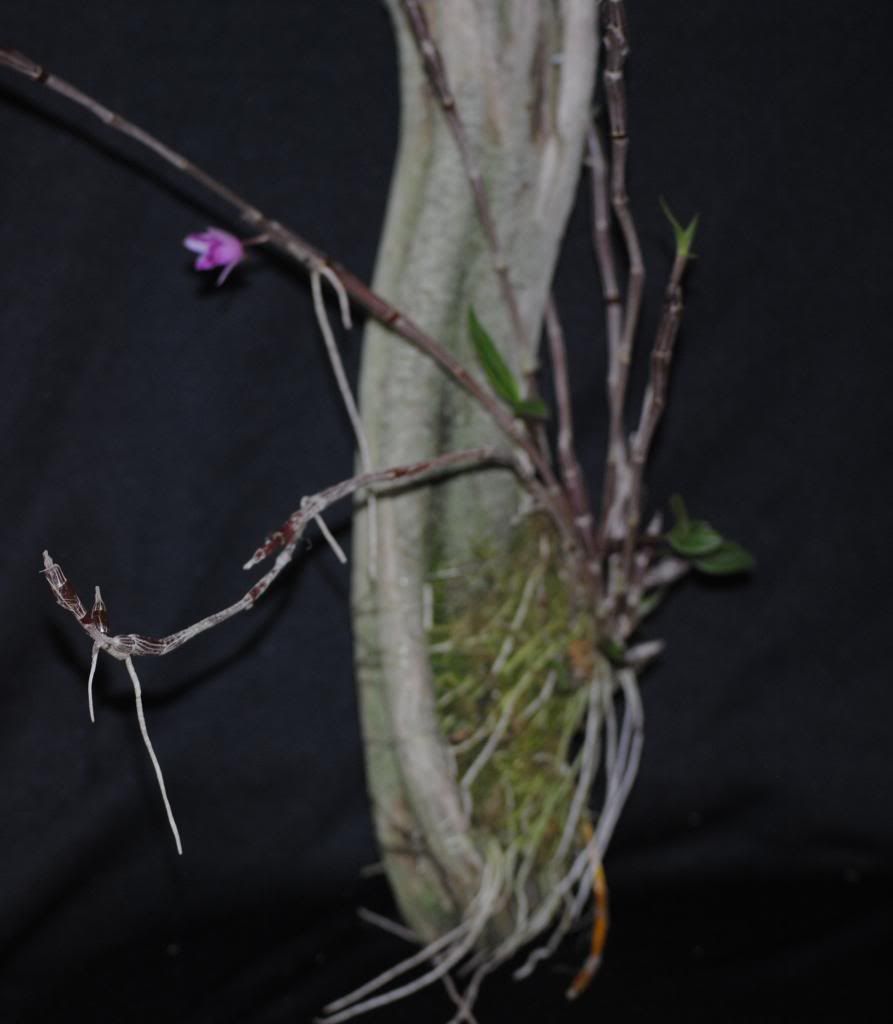
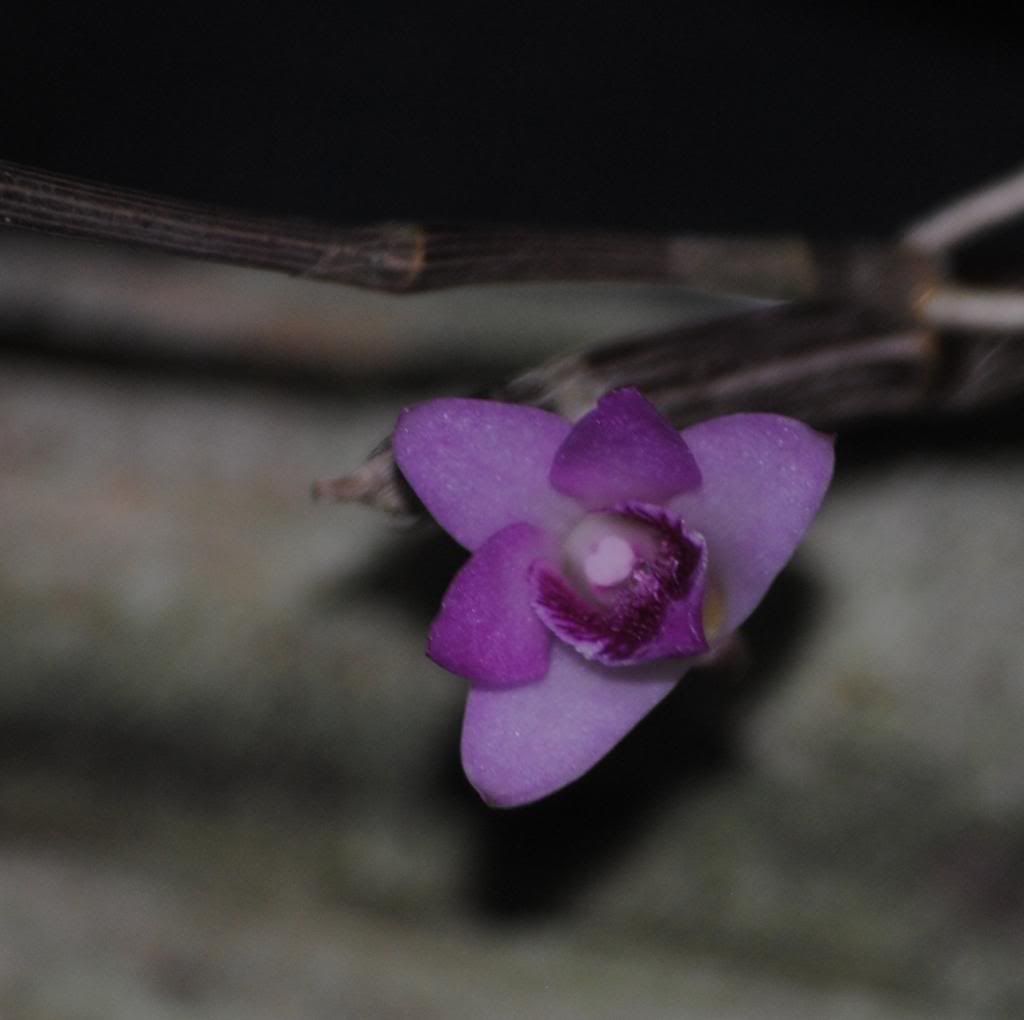
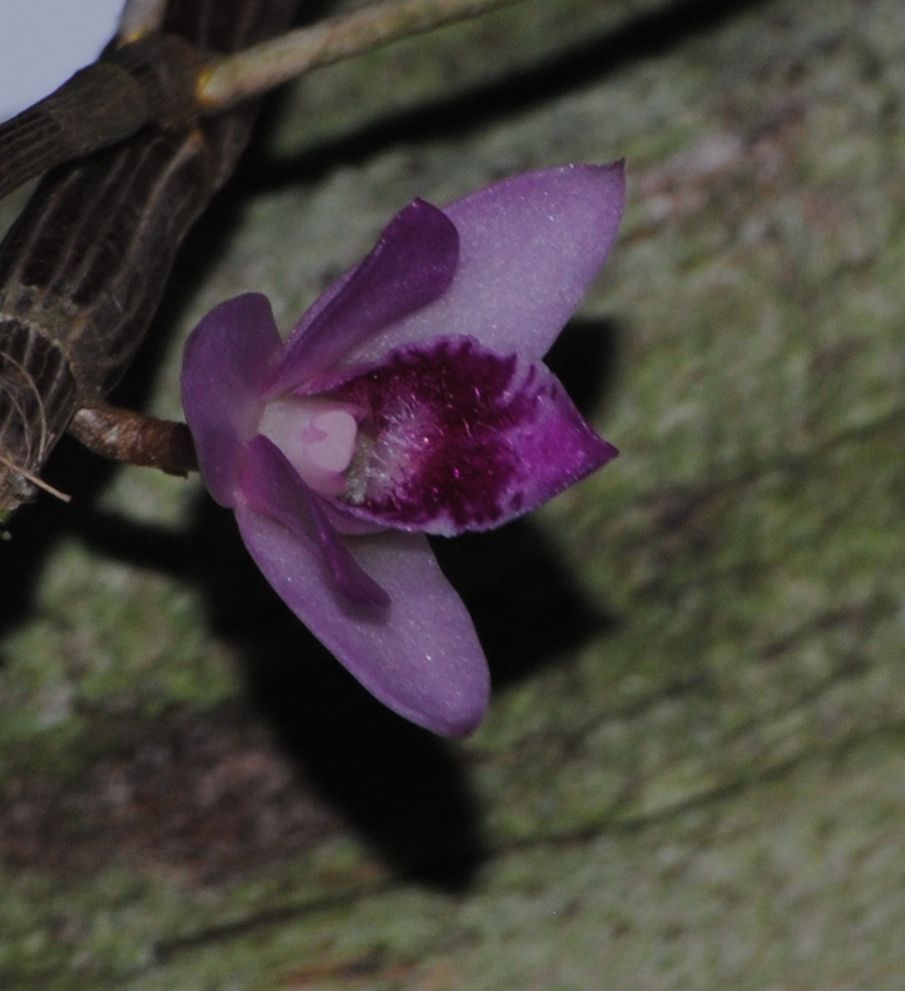
I'm going to combine these two Dendrobiums into one post, starting with D. sociale. Now, this is the second time I've tried sociale, the first time, it was doing well, but it was a few years ago when I was unsuccessfully battling spider mites, and yes, thin leaved Dens are very susceptable to them.  They killed it. Since then, I've found a decent chemical that helps control them, so here I am trying again.  Only one flower, and I guess most people wouldn't bother with this one, as the flowers aren't very big.  But they are so intricate when you take the time to look at it.  A couple pics, the first one is blurry, but was just trying to show the size of the bloom vs the plant.  And then two close-ups of the flower, one straight on, and one showing the beautiful lip.


And second, a Dendrobium I received as a keikii from a friend in CA, labeld sp. unknown.  It has now bloomed, and I think I know what it is, but I haven't compared it to the description yet, so I'll leave it as unknown.  Two shots, a whole plant (still very very small) and a close-up of the flower.


And the final one for today.  D. farmeri, mine is the pink one.  (Noticing a pink trend today :) ).  I've had this one for at least 5 years, and it is mounted.  I leave this one outside year round, protected from watering during the cooler months.  The leaves are pretty rough, but I wanted to highlight it as this is the best blooming I've ever had with it.


Hope you enjoy and take care.

Sarcochilus

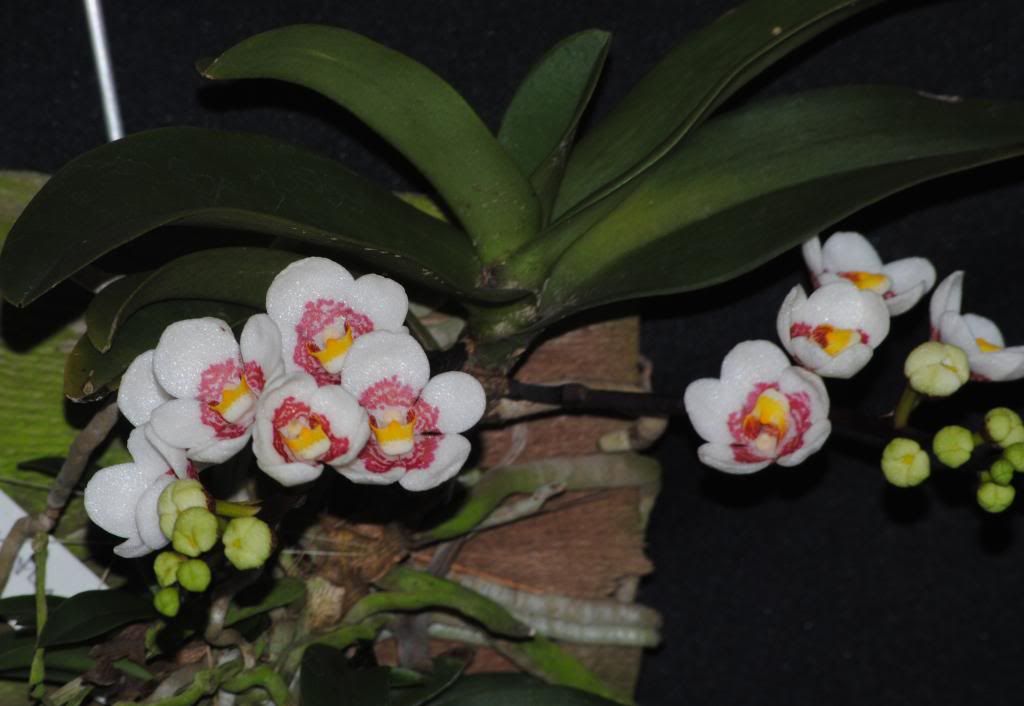
I currently only have one Sarcochilus, a hybrid names Melody.  But Sarcochilus was the first genus, back 15 years ago that I fell in love with.  My first dedicated orchid book was a Sarco book, the first species I ever bloomed was Sarco. cecilae, although I killed it soon after that  :)

When we moved to Charlotte, NC and I was keeping the greenhouse warm nights in the winter, and the summer days were regularly around 100F, and very low humidity, I moved away from Sarcs. After we moved down here, since we have temps that would allow a Sarc. to stay outside year round, but give it a cool winter, I decided to just try one again.  Now, I mounted it, because I like the look of it mounted, but that probably wasn't the best idea.  As we prepare to move again, to a warmer area, I'm not going to acquire anymore until I see how this one does.  Anyways, it's blooming now, two spikes on a small plant (that whole mounted thing doesn't lead to the most robust plant).

Saturday, April 20, 2013

Dendrobium ruckeri

And now, one of my favorite Dendrobium species.  Just love this one, the flowers smell just like honey when the sun is shining, but when it's cloudy, the fragrance turns to black pepper.  Easy grower, although it is an ungainly plant.  The canes branch freely, and I do have it mounted, but I've had to support all the canes as it just takes up too much space if I don't.  I grow this one just like every other deciduous Den, lots of sun, water and fertilizer in summer, lots of sun, no fertilizer, and almost no water in winter.

A reliable bloomer for me.


The whole plant photo shows the back of the mount, as the flowers opened facing the back.  But the plant itself isn't very attractive, so it actually looks better this way  :)


Maxillaria tenuifolia

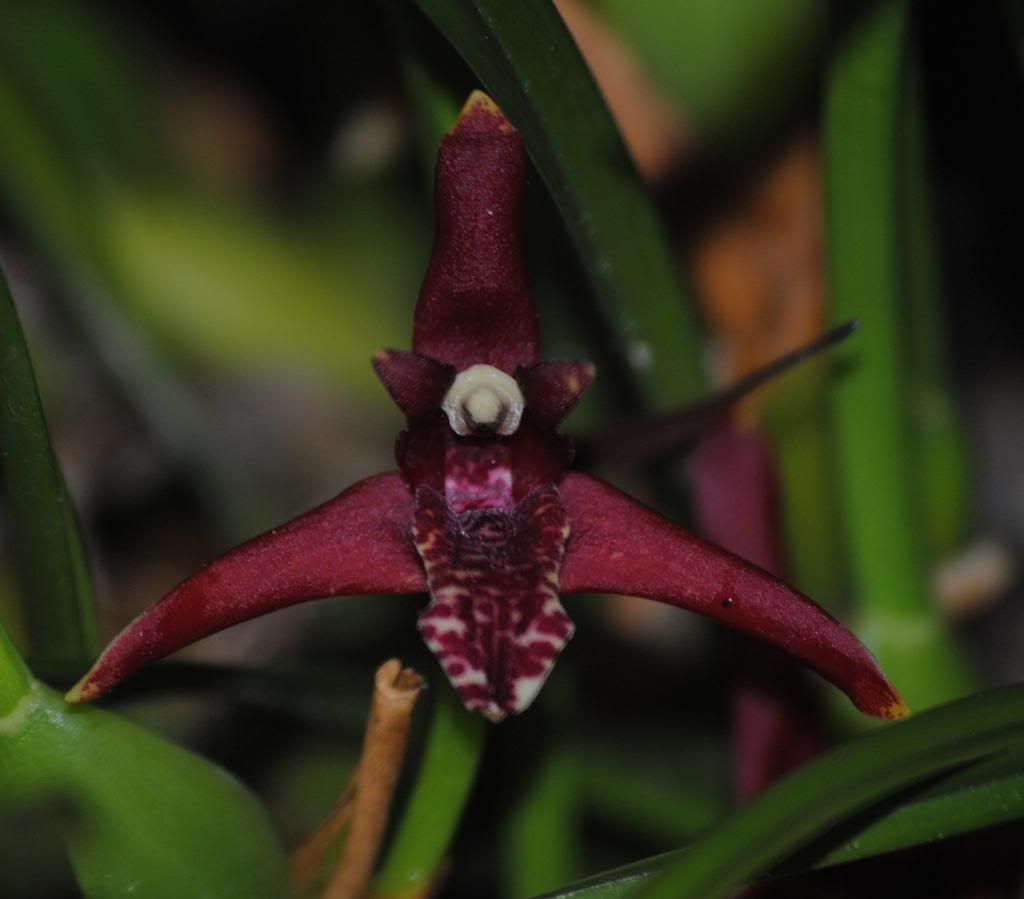
I usually do try to call my plants by their update to date accepted names.  But this species is so commonly known as Max. tenuifolia, I figured I'd title this post with that name.  For those who care, the current accepted name for this species is Maxillariella tenuifolia.

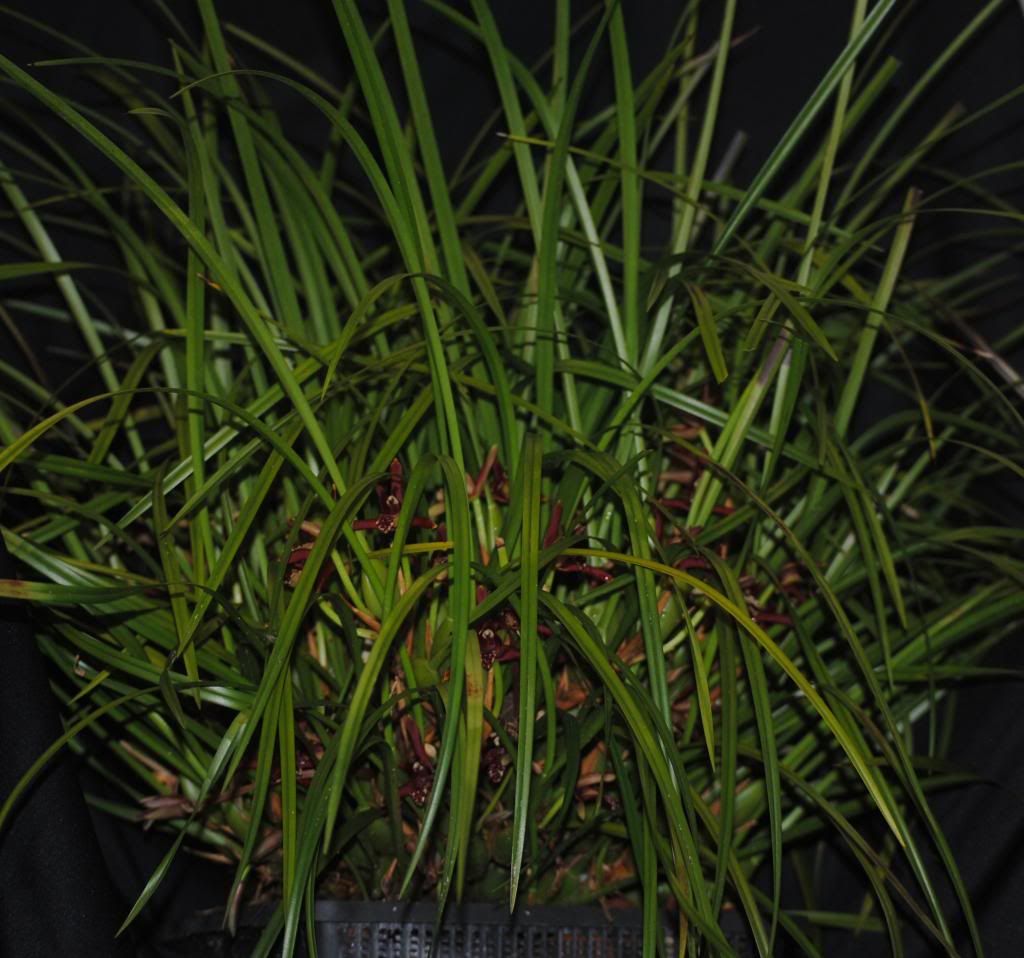
This is one of those species that almost everyone has. And a wonderful fragrance as well, to me is smells just like coconut suntan lotion.  I grow this one differently than many people advise.  Currently it is in LECA and lava rock, watered daily in summer, and much less often in winter.  I give it Vanda level light, and leave it outside year round, which means it gets down to just above freezing in winter, and very hot in the summer.

Here is last year's picture, it was in a 6 inch pot, with some LECA in there. 


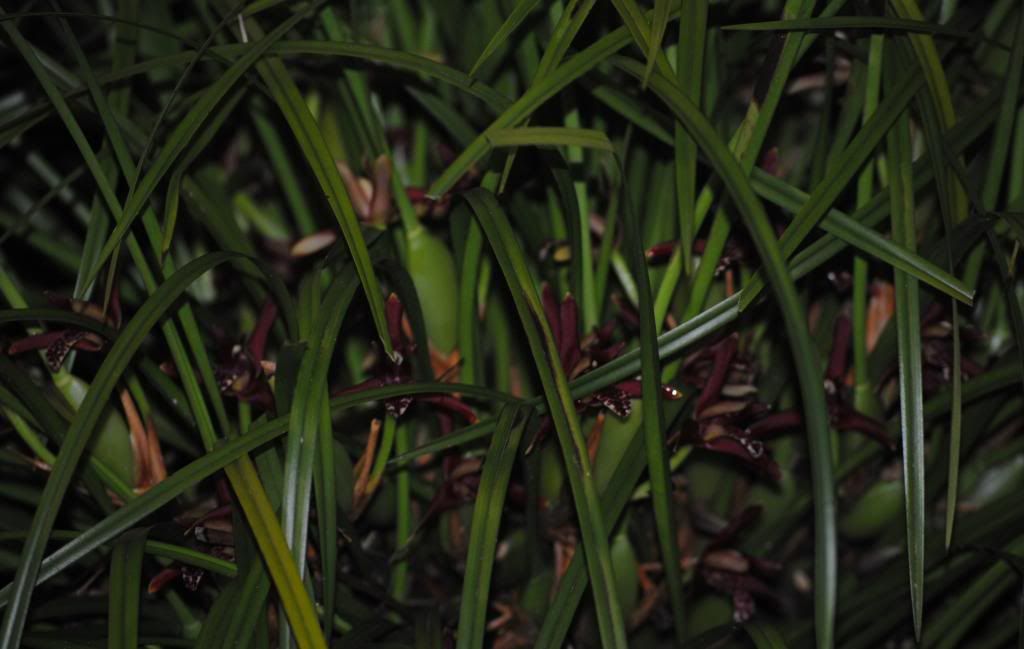
After blooming was done last year, I uppotted it into a 10? 12? inch pond basket, and filled in with lava rock  pieces.  The following pictures taken this morning. As I was bringing it into the house, my youngest son stated "Mom, why are you taking pictures of a weed?" :)  You can see it does grow like a weed for me. But it is not going to get repotted again this year.


I've seen pictures of this species with a yellow base color, and if I ever come across one, I'll make sure to pick it up.  Can't go wrong with this one.

Dendrobium Section Spatulata

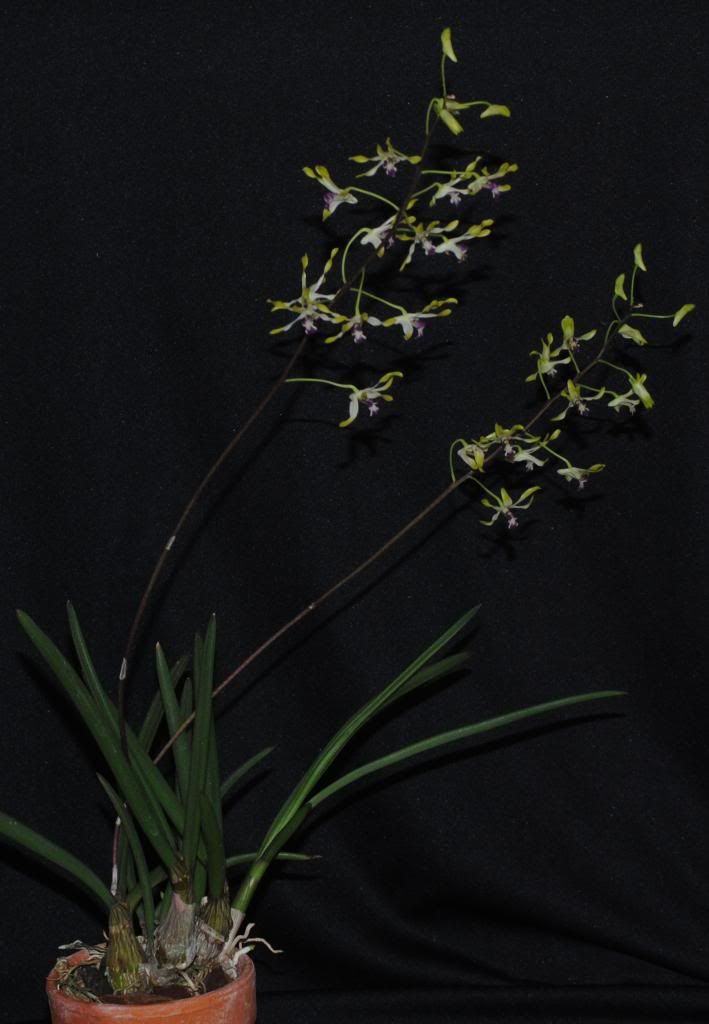
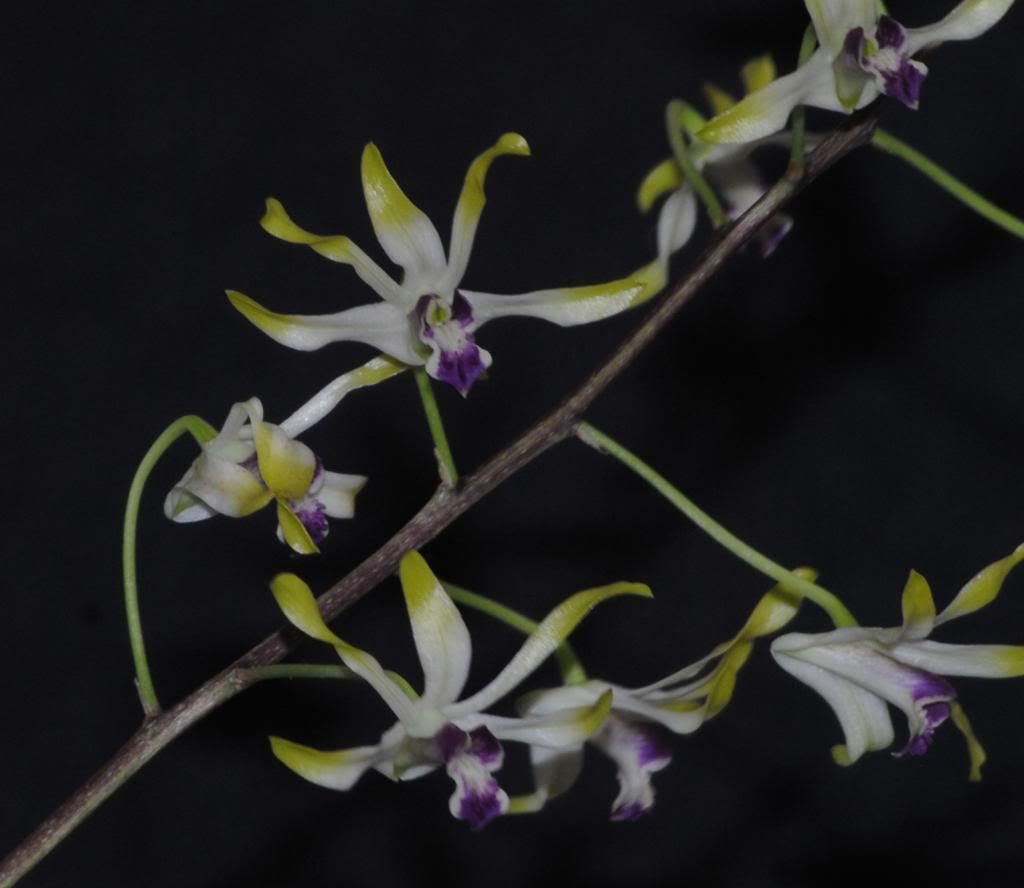
I'm not really crazy about the Spatulata Dens, but I seemed to have acquired a few species of them anyways.  The first two, D. gouldii and D. attenuatum were included free in orchids orders.  D. canaliculatum and carronii I did buy.  I grow these a bit differently, and will describe how for each one.

First, D. gouldii, still a relatively small plant, it is currently in a 5 inch pot, with Turface/Perlite mix.  It doesn't completely dry out in the warmer months, but I do let it approach dryness in the colder months.  So far, I have brought this in for the winter and it's kept at a minimum night temperature of 55F, and grown under T-5s.  In the summer, it receives direct sunlight from mid morning until about 2pm - so a lot of light.  I fertilize year round, weaker in the winter though.  First bloom, two spikes.


Next D. canaliculatum, I bought this recently from L. Del Favero Orchids in Tampa Fl, in spike, so I can't take any credit for this one.  It is currently potted in bark in a 2 inch clay pot, but once it is finished blooming, I am going to mount it.  No culture info, as I haven't had it long enough to do anything with it.


D. attenuatum is still very much a seedling, in a 2 inch pot, growing in Turface/Perlite mix.  I grow this warm, Catt level light, evenly moist in summer, and allowed to approach dryness in winter.  This is the second spring it has bloomed for me. The white dots are honeydew, not insects.  This plant seems to weep a lot.


And finally, D. carronii, which I have discussed individually about a year and a half ago, but I thought I'd highlight it again.  The original post has much better photographs, but this year, it did give me three spikes instead of two.  Grown warm, Vanda level light, mounted, lots of water and fertilizer in summer, and no fertilizer and almost no water in winter. First a picture of it from last year again, showing the plant habit,


And I cannot find my photo from this past blooming.  But it did have three spikes.

Hope you enjoy!